
Ophthalmic imaging · documented performance · clinical decision support

Topcon Healthcare precision for clinical decisions

Compare fundus cameras, OCT systems, slit lamps, automated refractors, and visual-field analyzers with method conditions, DICOM interoperability, and lifecycle support before value-analysis approval.

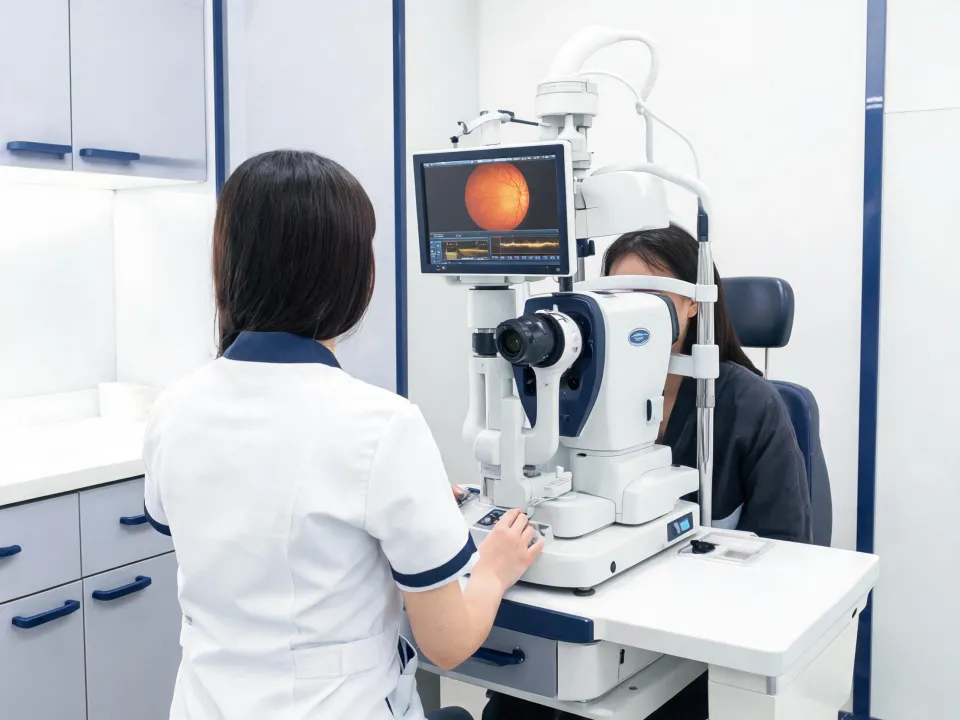
Topcon ophthalmic imaging suite in an eye-care clinic

Procurement baseline

Define acceptance envelopes before comparing Topcon models

Figures below are example requirement bands for ophthalmic and adjacent care workflows, not universal model claims. Confirm every value in the applicable data sheet, IFU, quotation, and market authorization.

Fundus field of view
45°–200° capture modes depending on camera class; record fixation target, pupil size, and media clarity assumptions
OCT axial resolution
Example target band 3–7 μm in tissue under declared scan protocol; retain phantom verification and software version
Visual-field strategy
Document threshold algorithm, stimulus size, fixation monitoring, and reliability indices before comparing devices

DICOM / EMR connectivity
Storage, modality worklist, structured reports, and EMR launch behavior under the site network boundary
Security evidence
SBOM availability, patch cadence, role-based access, encryption in transit, and coordinated vulnerability disclosure
Audit & retention
Operator identity, study amendment trail, export logs, and retention aligned to facility policy

MTBF / MTTR targets
Record preventive-maintenance interval, urban on-site response goal, loaner policy, and parts staging assumptions
Training burden
In-service hours, competency checklists, and refresher cadence for photographers, technicians, and biomed staff
Total cost of ownership
Capital + service + consumables + downtime + decommissioning across a 7–10 year device horizon

Evidence path

Three review tracks keep Topcon claims attached to conditions

Ophthalmic team reviewing imaging validation records

01 · Clinical fit

Start with indication, pupil, and decision threshold

A useful specification names the clinical question, media opacity expectations, dilation policy, axial-length range, and reading protocol. A headline resolution number without those conditions cannot establish diagnostic fit for glaucoma, retina, or refractive pathways.
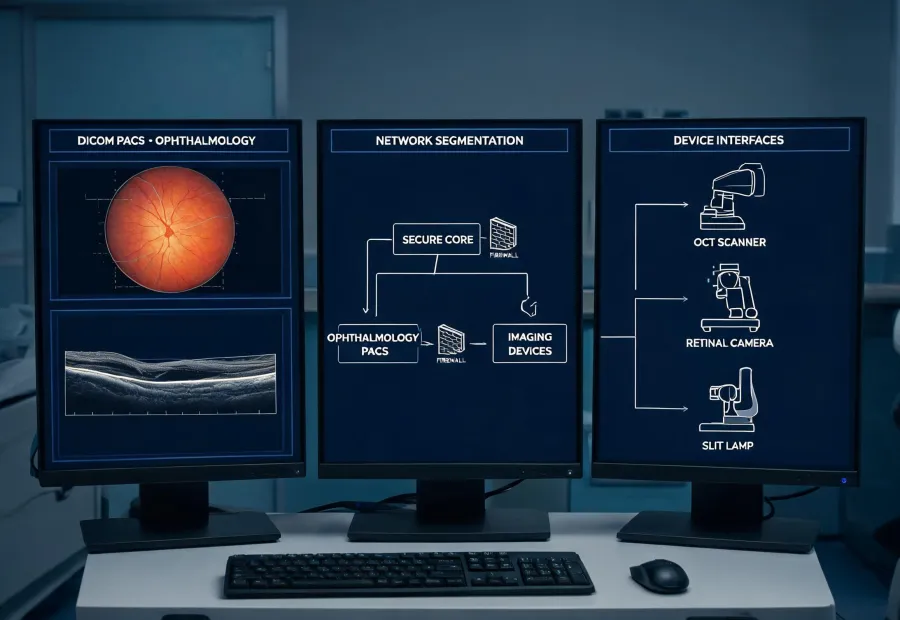

Clinic integration architecture for ophthalmic devices

02 · Workflow fit

Trace every handoff from capture to verified report

Map appointment intake, photographer assignment, capture retries, grading queue, EMR result release, and exception handling. This exposes labor and integration constraints that a device brochure alone will miss.

Biomedical service planning for ophthalmic instruments

03 · Lifecycle fit

Price the operating model, not only the instrument

Document PM intervals, consumable dependencies, response targets, remote-access policy, training, decommissioning, and parts availability. Service assumptions belong in the same approval record as imaging performance.

Documentation framework

Standards and regulations to verify by product and market

Listing a framework here does not claim that every Topcon model holds every clearance or certification. Procurement teams must obtain current, model-specific evidence.

510(k)

FDA cleared pathway (where applicable)

Confirm K-number, indication for use, predicate comparison scope, and labeling limits. Use “FDA cleared” for 510(k) devices; reserve “approved” language for PMA products only.

MDR

CE marked under MDR 2017/745

Check intended purpose, classification, notified-body involvement where required, clinical evaluation, and post-market surveillance obligations for the specific configuration.

13485

ISO 13485 quality management

Review certificate scope, covered legal entity and sites, issuing body, issue date, expiration date, and exclusions rather than relying on a logo alone.

60601

IEC 60601 electrical & usability safety

For powered ophthalmic systems, examine basic safety, essential performance, EMC evidence, and IEC 62366 usability files tied to the marketed configuration.

Care settings

Evaluation changes with the operating environment

Hospital ophthalmology department

Hospital Eye Services

Specialty ophthalmology clinic

Specialty Eye Clinics

Clinical laboratory diagnostics bench

IVD & Laboratory

Home care monitoring program

Home & Remote Care

Workflow perspective

What a defensible evaluation record needs to answer

“Can the claimed OCT axial resolution be reproduced with our scan protocol, phantom set, and software build?”

Director of Imaging
Academic Medical Center, Northeast US
Composite evaluation question · educational synthesis, not a customer endorsement

“What happens to modality worklist and report release when the PACS or EMR interface is unavailable?”

Biomedical Engineering Lead
Multi-site Eye Institute Network
Composite operations question · educational synthesis, not a customer endorsement

“Which service, training, cybersecurity, and decommissioning assumptions belong in the seven-year TCO model?”

Value Analysis Chair
Regional Health System Procurement
Composite procurement question · educational synthesis, not a customer endorsement

Prepare a scoped request

Bring the model, protocol, site, and evidence list into one Topcon inquiry

A focused request helps separate catalog-level information from configuration-specific facts.

  • Product family and model or configuration under review
  • Clinical indication, capture protocol, and acceptance criteria
  • DICOM, EMR, cybersecurity, and data-retention requirements
  • Required regulatory, service, training, and lifecycle documents